
This little piggy went to market, this little piggy stayed home, and THESE little piggies got to join our little farm and live a beautiful life full of awesome grass, organic food scraps, and a whole lot of back scratches!
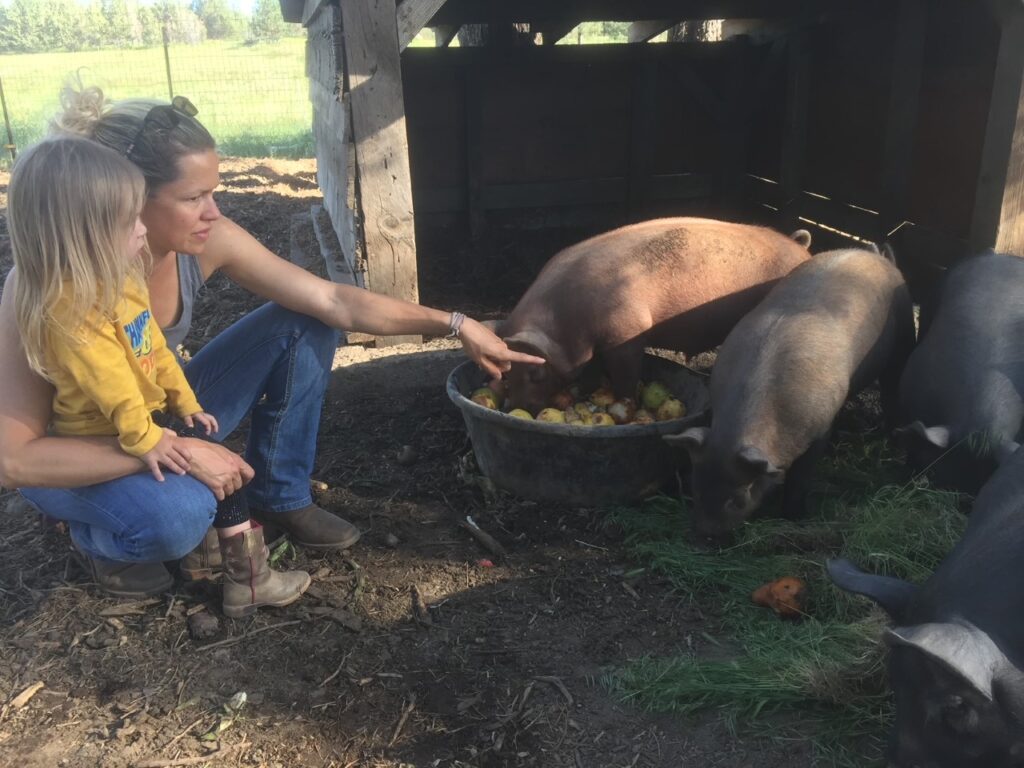
How It All Began
So let’s go back about 8 years. 2012 is pretty much the year my husband and I got our hands in most of what we do now, or at least that’s when the manifesting of our future began. We had been dating for 6 months, he asked me to move in, and next thing you know we got two pigs.
Did we have any clue as to how to raise pigs? Absolutely not. BUT, the desire to learn was strong and how better to learn than to be hands on. We found someone that had weaner pigs for sale and that day took home BLT and BFD (Breakfast for Dinner).
Side note: We name all of our animals. It’s the best way to become personal with them, to show compassion and love to them, to want to raise them as best as possible.
What We’ve Learned About Caring For Our Pigs
So we brought these two weaner pigs home and began our research.
What’s the best way to provide water? We’ve had most success with a water nipple. It keeps the water clean. There are times where a trough is used and needed with regular cleaning.
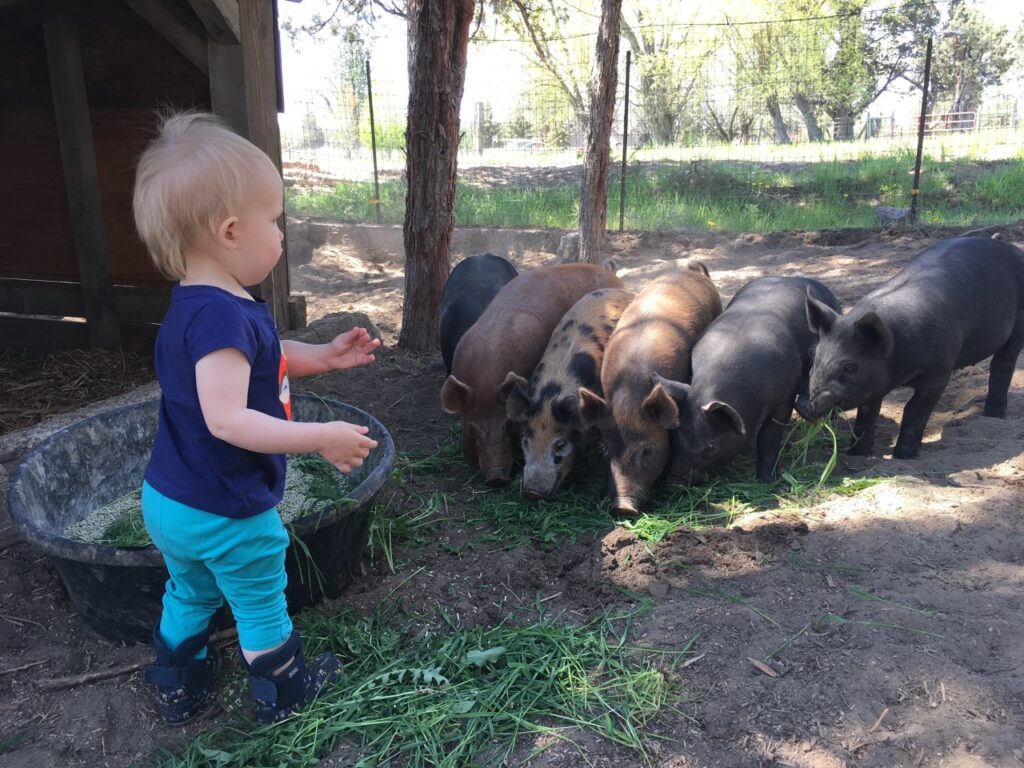
What type of feed do we give them and how much are they going to eat? We go for a 19% protein feed to start them off with and continue with that up until a good month before butchering where we begin a 14% mix. Our pigs are fed a non-gmo mix that is a few years in to becoming certified organic feed. We also feed them our organic food scraps, anything overgrown from the garden, and as much pasture as we can give them! They won’t gorge themselves to the point of being unhealthy so we give as much as they can eat. We judge this amount by looking in their food bowl the next morning and if there is any leftover we cut the amount but if it’s empty we try for more.
What is the best type of living space for them? Make sure they have a shelter to keep them out of the weather. It is great if you can rotate them on different sections of land/pasture to insure the soil isn’t destroyed by the pigs rooting the ground too much. Give them plenty of space to be the wonderful pigs that they are!
More importantly…
When are these little pigs going to let me scratch their backs?!? Hahaha! This all depends on how often you’re out there with them. Feeding once a day can take as little as 5 minutes, if that. We come out a few times every day and talk to the pigs. They become comfortable with our voices, understand we are there to feed them and love them, and they soon calm down. Our goal is we don’t want the pigs to fear us. We don’t want them to fear anything really. We want them to be happy and healthy and live a beautiful pig life!
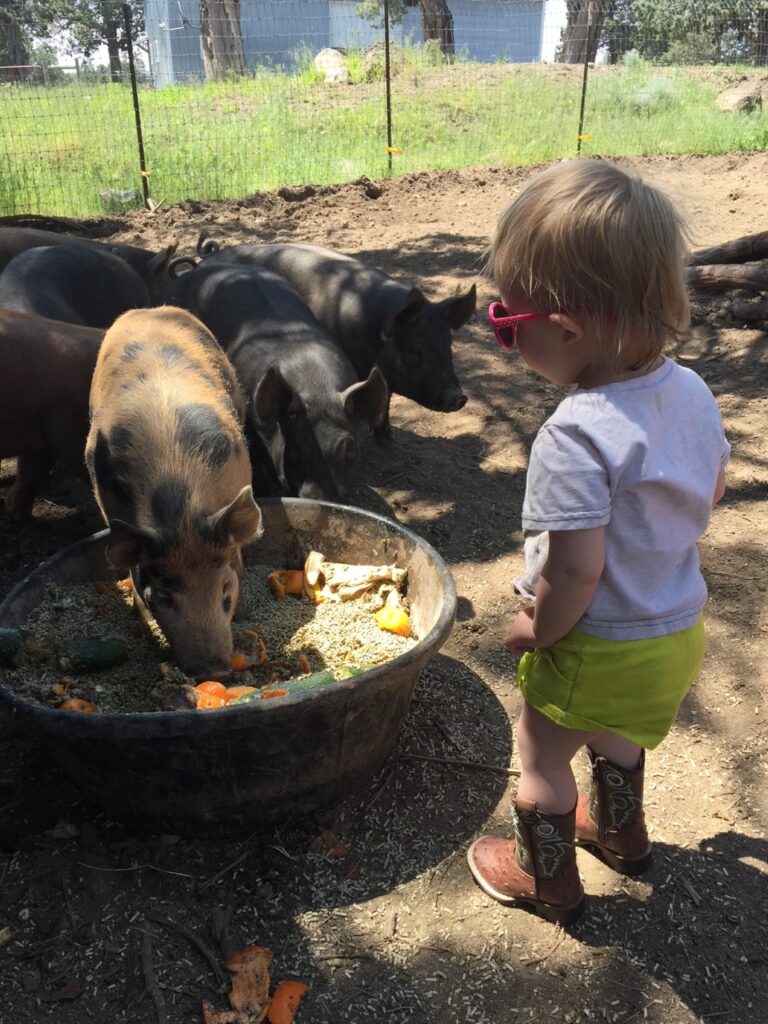
Now with our girls helping around the farm (4 and 3 years of age) we are a bit more careful in teaching them how to stay calm and move slowly around the pigs. We’re teaching them patience. Another reason to have the pigs feel comfortable coming up to us is when the day comes to process them it makes things a bit easier and with much less stress, if any, on the pigs.
Why We Do What We Do
When it comes down to it, it’s all about energy exchange. We are giving these pigs the best life possible so in turn they provide us with the best food possible. That love is felt!
Here we are, over 8 years of raising pigs and now we are capable of raising, processing, butchering, cut and wrapping, and thoroughly enjoying our pork! We now hold pig butchering weekends with the community that purchased that year. We gather, we teach, we learn, we love, and we laugh. People walk away with a better understanding of what it takes to go from pig to pork. They also walk away with an appreciation for the animal like no other.
There’s something about putting your hands on and being a part of the process of your own food. This could be planting the romaine lettuce seed, watering, mixing seasoning for pork sausage, taping butcher paper, being on coffee patrol, collecting eggs, or visiting with the animal and making them feel comfortable.
Being a part of it, no matter what part, will make a difference. It will set in an important connection between you and your food. It’s also about knowing where your food came from. We are raising our girls to understand that our food comes from our land and hard work or the land and hard work of others in our community. Bacon doesn’t just magically appear on a store shelf. You can’t request a whole pig to be made into bacon…although we all dream for that possibility. Haha!
If there was an end note to all of this, I’d say it’s connection. Connect to your food and your community. You will live a happier and healthier life.
Until next time!
– Terah

