
In today’s chaotic world, we can sometimes find ourselves more in need of stress reduction techniques than ever. Depending on the context, I find a lot of different ones helpful – qigong, yoga, exercise, watching a funny TV show, relaxing with friends… but overall I’d have to say EFT tapping is my go-to.
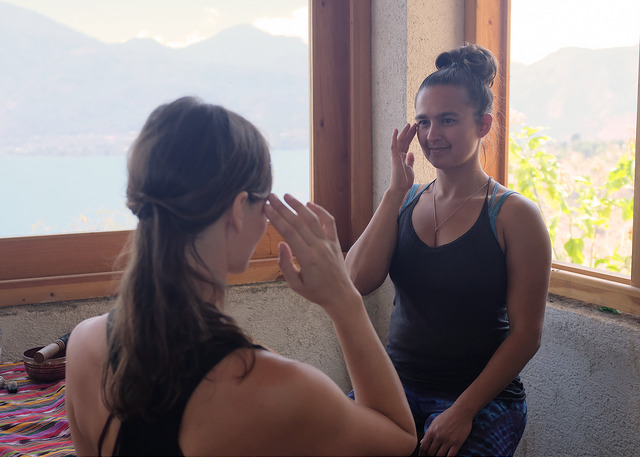
EFT stands for Emotional Freedom Techniques, and is also called “EFT tapping” or sometimes simply “tapping”. It’s basically a very simple form of acupressure that combines tapping on points (mostly on the face, but sometimes elsewhere) with mindfulness techniques. It’s a pretty useful tool to help with processing difficult emotions and improving some types of physical discomfort.
Following The Path Of Least Resistance
The main reason I find EFT so accessible is that for me it’s not contingent on trying to heavily control what I’m doing — whereas when practicing breathing or visualization, I feel like sometimes these techniques send me spinning off when I can’t do what I am “supposed to”. The tapping, while involving a bit of movement, is also not a super large or disruptive movement the way some of the qi gong techniques I know can sometimes feel.
EFT can take a bit of work to learn, but after that initial investment, I find it takes very little effort to do tapping (both mentally and physically). It’s kind of ironic, right — that for me, a number of stress relief techniques actually create stress about as often as they relieve it!
(For some people, EFT can be that way. So I think it’s all about being exposed to a few different tools to add to our toolboxes and then being free to draw on what works for us. Then we can choose those tools that we find the most helpful with the least additional stress in any given scenario!)
When To Use EFT Tapping
SO…when might a person use EFT? Well, let’s just say I am definitely not starting my day with it regularly the way people might with yoga or qi gong! It’s something I’d recommend to use “on demand” when in some kind of distress.
- To help fall back to sleep after waking up in the middle of the night.
- To lessen symptoms of physical pain and body tension.
- While venting about a stressful day.
- In the lunchroom during lunch break, to curb a stressful day.
- To process harsh feelings like hate and jealousy so we can access a little more insight and discernment in dealing with emotions.
- I’ve even used it when I started to freak out after losing my keys to help calm me down…which enabled me to actually find the keys! It helped me relax from overwhelm so that I could form a plan of action.
Like I mentioned previously, other techniques can work in these scenarios too. I just find it pretty quick and easy for me to do tapping. Our relaxation techniques shouldn’t be too stress-inducing, right? 🙂
How To Do EFT Tapping
If you’re interested in trying EFT tapping for yourseld, Goddess Village’s free Nurture YourSELF 24-Day Reset has 3 short lessons with me on the basics of EFT, including a few starter-techniques! The videos walk you through the steps while explaining the process, so you get to learn while doing it hands-on.
As a side note, EFT Tapping can be used in a deeper, more focused way as well–as opposed to on-demand stress relief. Maybe that will be the subject of a future lesson! 🙂

*Lineage statement: Emotional Freedom Techniques (EFT), aka “Tapping,” is a healing modality that combines stimulation of acupressure points with mindfulness techniques. It was developed in the 1990s by Adrienne Fowlie and Gary Craig, as a way of simplifying Dr. Roger Callahan’s Thought Field Therapy (TFT) for use as a self-help tool.
EFT and TFT truly originate in acupuncture, which is rooted in the Daoist tradition and believed to date back to several thousand years ago in China (however, there has been early evidence of similar techniques in other parts of the world). Acupuncture was adapted into several modalities on its way to being used in EFT: into Applied Kinesiology by American chiropractor Dr. George Goodheart, then into Behavioural Kinesiology by Australian psychiatrist John Diamond, then TFT by American psychologist Callahan, and eventually EFT by Craig and Fowlie. There have been other similar methods of combining acupressure with mindfulness developed by other psychologists, including Fred Gallo and Dr. Patricia Carrington. It is important to acknowledge that none of these modalities would be possible if not for the wisdom of the ancient practice of acupuncture.)



Excellent information. Thank you for making it so relatable!
So glad you found it useful! 🙂
Thank you so much!
You’re welcome! 🙂